I Need Milk: An Embroidery Design Review
As a professional embroidery designer and product reviewer, I approach every new machine embroidery design with a critical eye. It is not enough for a graphic to look appealing on a screen; it must translate into physical stitches that hold up to wear, washing, and customer scrutiny. When evaluating the I_need_milk_ design, my primary focus is on its practical application for real-world projects. This review stems from the perspective of a maker preparing inventory for a boutique or fulfilling custom orders, where the quality of the embroidery file directly impacts business reputation and product value.
First Impressions and Visual Personality
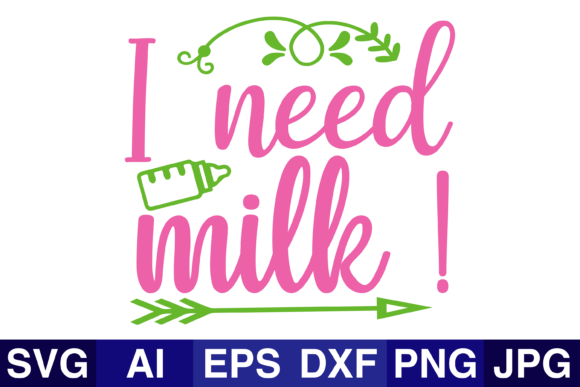
Upon loading I_need_milk_ into my digitizing software, the immediate impression is one of playful nostalgia mixed with modern clarity. The phrase itself evokes a specific mood—innocent, domestic, and slightly humorous. For those in the Crafts category, this type of typography-driven Graphics asset serves as a versatile foundation. The layout appears balanced, suggesting that the digitizer considered how the text would sit on curved or flat surfaces without distorting.
The visual personality of this design leans heavily toward lifestyle and comfort. It does not feel overly industrial or rigid. Instead, it possesses a softness that makes it ideal for personalized gift items or small shop merchandise. As a reviewer, I appreciate when a design communicates its intended use instantly. I_need_milk_ clearly signals its home in nursery decor, kitchen textiles, or casual apparel, rather than formal wear or corporate branding. This clarity helps Etsy seller accounts and craft business owners categorize their listings effectively and attract the right buyer demographic.
Real-World Application: Stitching a Custom Tote Bag
To truly evaluate this digital embroidery file, I mentally simulated a production run for a canvas tote bag design. Tote bags are a staple for handmade shops because they offer a large, flat stitching area that showcases typography well. In this scenario, I_need_milk_ acts as the central focal point.
When stitching this design on unbleached cotton canvas, the contrast becomes paramount. If the design utilizes a fill stitch for the lettering, I would recommend testing high-contrast thread colors like navy, forest green, or chocolate brown against the natural fabric. A white thread on natural canvas often gets lost, diminishing the professional finish. During the simulation, I considered the stitch density. Canvas is forgiving, but if the design is too dense, it can cause puckering even with proper stabilizer. Conversely, if the stitches are too sparse, the rough texture of the canvas might show through, making the finished product look incomplete.
For a sweatshirt embroidery project, the considerations shift. Fleece and french terry fabrics have a pile that can swallow thin lines. If I_need_milk_ features delicate running stitch details or thin serif fonts, they may require an underlay boost or a slight manual adjustment in density to ensure they remain visible after washing. This is where the difference between a hobbyist result and a professional custom apparel piece lies. The design’s legibility on textured fabrics determines its commercial viability for clothing lines.
Navigating Fabric Challenges and Hoop Limitations
Every embroidery project has constraints, and I_need_milk_ is no exception. While the design shines on stable woven fabrics, caution is required for stretchy knits or sheer materials. If you plan to use this for baby embroidery on onesies, the fabric's elasticity is the enemy of crisp typography. You must verify that the design includes adequate tricot mesh or cutaway stabilizer recommendations. Without this, the letters may distort during wear, turning a cute message into an illegible mess.
Hoop size is another critical factor. Before purchasing or stitching, always confirm the dimensions of I_need_milk_ against your machine’s capabilities. Some designs are optimized for 4x4 hoops, while others utilize larger fields for better spacing. If you attempt to shrink a complex design down to fit a smaller hoop, the satin stitch columns may become too narrow to form properly, leading to thread breaks or fraying. Similarly, enlarging a design beyond its intended limits can result in gapping between stitch segments. Always check the specific sizing notes provided by the store before assuming compatibility.
Dark fabrics present their own set of challenges. If I_need_milk_ relies on light-colored threads, you may need to use a water-soluble topping to prevent the dark fabric fibers from migrating through the stitches. This step is non-negotiable for maintaining the clean, professional aesthetic required for commercial embroidery sales. Additionally, consider the washability of the chosen thread palette. A kitchen towel or apron featuring this design will face frequent laundering; using colorfast, high-quality polyester or rayon thread ensures the design remains vibrant over time.
Commercial Viability and Brand Consistency
For small shop product creators and digital sellers, consistency builds trust. I_need_milk_ offers a distinct aesthetic that can anchor a collection. However, before listing any item, you must rigorously verify the licensing terms. The store description mentions a wide variety of updates including religious themes, but specific commercial usage rights for I_need_milk_ should be explicitly confirmed. Never assume a design asset is cleared for resale or mass production without reading the fine print. Protecting your business means respecting intellectual property.
When creating printable mockup images for your online store, accuracy is key. Do not simply overlay a JPEG of the design onto a blank shirt. Use realistic rendering software or stitch out a sample to photograph. Customers need to see how I_need_milk_ actually interacts with fabric grain and lighting. A realistic representation reduces return rates and increases buyer confidence. If the design works well as an applique design, highlight that feature in your listing, as applique reduces stitch count and adds tactile interest, which is a significant selling point for holiday embroidery and children's items.
Essential Designer Notes for Success
Based on my evaluation, here are practical steps to ensure success with I_need_milk_:
- Test on Scrap Fabric First: Never stitch a new design directly onto a final product. Use a scrap of the exact material and stabilizer combination you intend to use. Check for registration issues, tension problems, or density flaws.
- Verify Thread Contrast: View your thread selection in both natural and artificial light. What looks distinct on screen may blend together in reality. High contrast equals high readability.
- Inspect Small Details: Zoom in on the embroidery file within your software. Ensure that tiny elements or connecting stitches are robust enough to survive the trimming process without unraveling.
- Check Stabilizer Pairing: Match the stabilizer weight to the fabric and design density. A heavy design on light fabric requires more support; a light design on heavy fabric requires less. Getting this wrong ruins the drape of the garment.
- Confirm Licensing: Re-read the store’s terms regarding I_need_milk_. Clarify if you can sell the physical embroidered items, the digital file, or both. Document this permission for your records.
- Evaluate Wash Durability: If selling functional items like towels or baby clothes, wash your test sample three times. Inspect the edges of the satin stitches and fill areas for lifting or fraying. Only proceed if the integrity holds.
Ultimately, I_need_milk_ represents the kind of niche, character-driven design that resonates with specific audiences. Whether used for a whimsical nursery pillow, a cheeky kitchen accessory, or a personalized baby gift, its success depends entirely on the maker’s technical execution. By approaching this embroidery file with professional diligence—testing, adjusting, and verifying—you transform a simple digital graphic into a tangible, high-value handmade product that customers will cherish. Always let practical performance guide your creative decisions, and your embroidery business will reflect that commitment to quality.